Reflections on Braiding Sweetgrass
In my dining room, I have a piece of art that says 「いただきます (itadakimasu)、ごちそうさま (gochisousama)」. These are the words we say before and after a meal in Japan, acknowledging what we’ve received and the lives and labor that made it possible.
Lately, I’ve been wondering what these words mean when I say them over frozen lasagna and a bagged salad kit. Not gonna lie, this combination saves our dinner more often than I’d like to admit. Yet sometimes, I feel a disconnect between the words and what’s in front of me. The food is ready to heat, the salad ready to toss. I don’t see the growing, harvesting, or preparing. I see a product, a package, and a few minutes on the clock. I know the food came from somewhere. Lasagna noodle once a wheatgrass under the sun (hopefully), milk for parmesan cheese once produced by a cow. But where? when? how?
Reading Braiding Sweetgrass by Robin Wall Kimmerer has me thinking about my relationship with the natural world, and the difference between taking something and receiving it.
As heterotrophs, we human beings are takers. We harvest, consume, and digest. That’s how we survive. But in modern society, we also give our labor, time, and energy to make things faster, cheaper, and easier for others. We have built a world where almost anything we want is one purchase or one click away. Same-day delivery and Doordash.
And somewhere along the way, I wonder if we’ve forgotten how to behave as a taker.
We are receivers before we are givers. Before we can feed someone else, we must first be fed. Before we can teach, we must learn. We may grow into people who provide and care for others, but we never become truly independent. We are always receiving, even when we no longer recognize it.
I think about the journey from farm to table. The soil, the rain, the sun, the hands that planted and harvested. When I pay a farmer at local farmer’s market, I want to see more than a transaction. I want to acknowledge the story that made that food possible.
I don’t want to romanticize cooking every meal from scratch or turn gratitude into another standard to live up to. The frozen lasagna can stay. But I want to understand why I sometimes struggle to feel the meaning behind itadakimasu when so much of the story behind my food is invisible. How about the clothes you wear and house you live in? What’s their name, face and story?
Maybe receiving with awareness begins with noticing that distance. Not pretending it’s wrong to seek convenience, but recognizing what convenience can make us forget. I don’t want to stop being a giver; a mother, wife, movement teacher and sharing kindness. But I want to remember that I’m a receiver, too. Before asking what I can give to the world, I want to pay more attention to what I’m already receiving.
The next time I say itadakimasu, I want to think not only about what’s on my plate, but about everything that made it possible for me to eat, and try my best to close the distance.
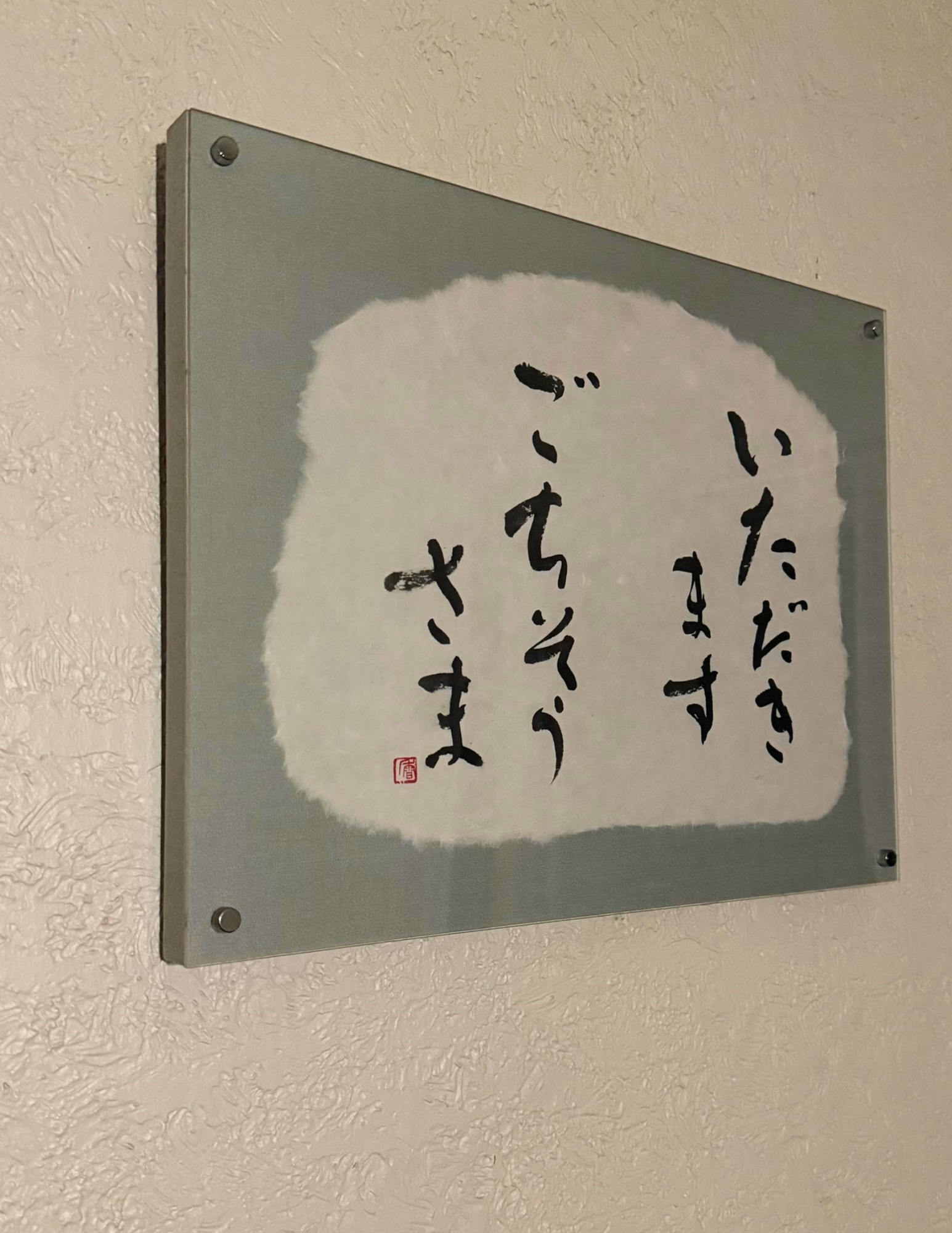
いただきます、ごちそうさま
Art by my mom, Kyo :)
Love and gratitude,
Kanade
